


“The Global Stage Is Open — But Only for Those Who Are Prepared”
Muhammadjon Ataev: “Young people from Uzbekistan can compete globally. But it requires knowledge, discipline, and real results.”

Today, many young people in Uzbekistan are thinking about studying abroad, attending international conferences, launching startups, or entering the global job market. Yet one fundamental question remains: where do you start — and how do you actually prepare?
Muhammadjon Ataev approaches this topic without romantic slogans. For him, international conferences are not about selfies or badges, but platforms where one must clearly position themselves in global discussions. Education, in his view, is not a diploma for display, but a system that builds discipline, analytical thinking, and practical skills.
In this conversation, he speaks candidly about how to access top-tier international conferences, why participation matters, how the U.S. education system differs, how to balance study and work, practical financial pathways to global events — and finally, his current focus in business and startups.
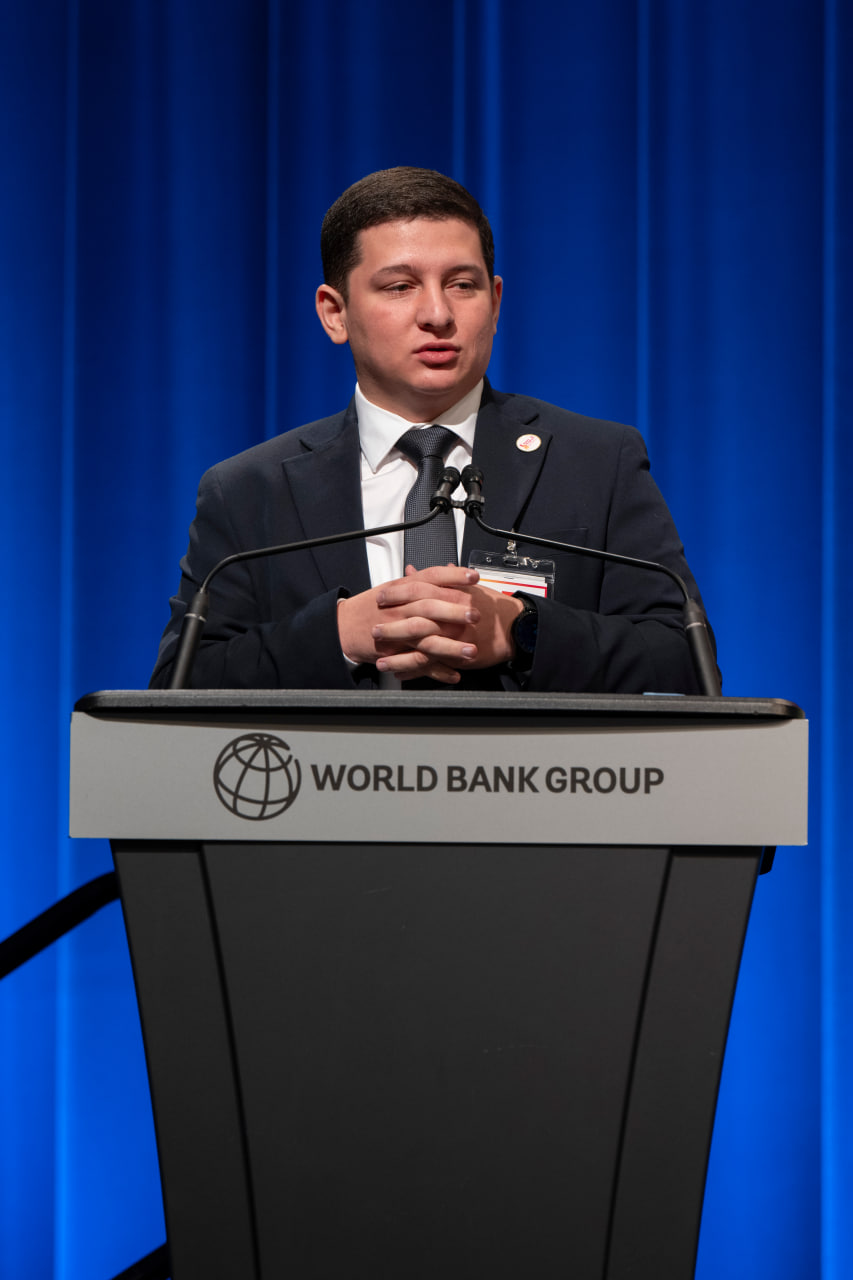
— You often say, “the global stage is open.” What do you really mean by that?
— This is not a motivational slogan. What I mean is quite simple: the global system is not a closed community — but it also doesn’t keep unprepared people inside.
The world doesn’t ask where you’re from; it asks what you can do? What problems are you solving? What results have you delivered? Can you defend your ideas? Do you have discipline?
— You often speak about advancing the interests of Central Asian and Uzbek youth in global discussions. Why is this important to you?
— Because we have talent, but our visibility systems are weak. Global decisions, trends, and resources tend to revolve around those who are visible.
If we don’t present ourselves professionally and advocate for our own interests, no one will do it for us. I encourage young people not to “show up once,” but to engage long-term: participate in discussions, ask questions, build partnerships, and enter global spaces with intellectual or practical contributions.
— Many see participation in prestigious international conferences as “impossible.” How can one actually get access?
— First, conferences are not all the same. Each has a specific focus and audience. Access usually comes through three main pathways. First, through applications — as delegates, fellows, or participants in youth programs. Many international conferences allocate specific quotas for young people. Even within the UN system, organizations like MGCY provide access to global dialogue. Second, through academic or social initiatives. If you have a relevant article, research, or practical project aligned with the conference theme, your chances of being invited as a speaker or panelist increase significantly. Third, through institutions — universities, international organizations, professional associations, or partner delegations.
The biggest mistake is thinking, “If I know the right person, I’ll get in.” Prestigious platforms prioritize preparation: a strong professional profile, real results, clear motivation, and well-defined goals.
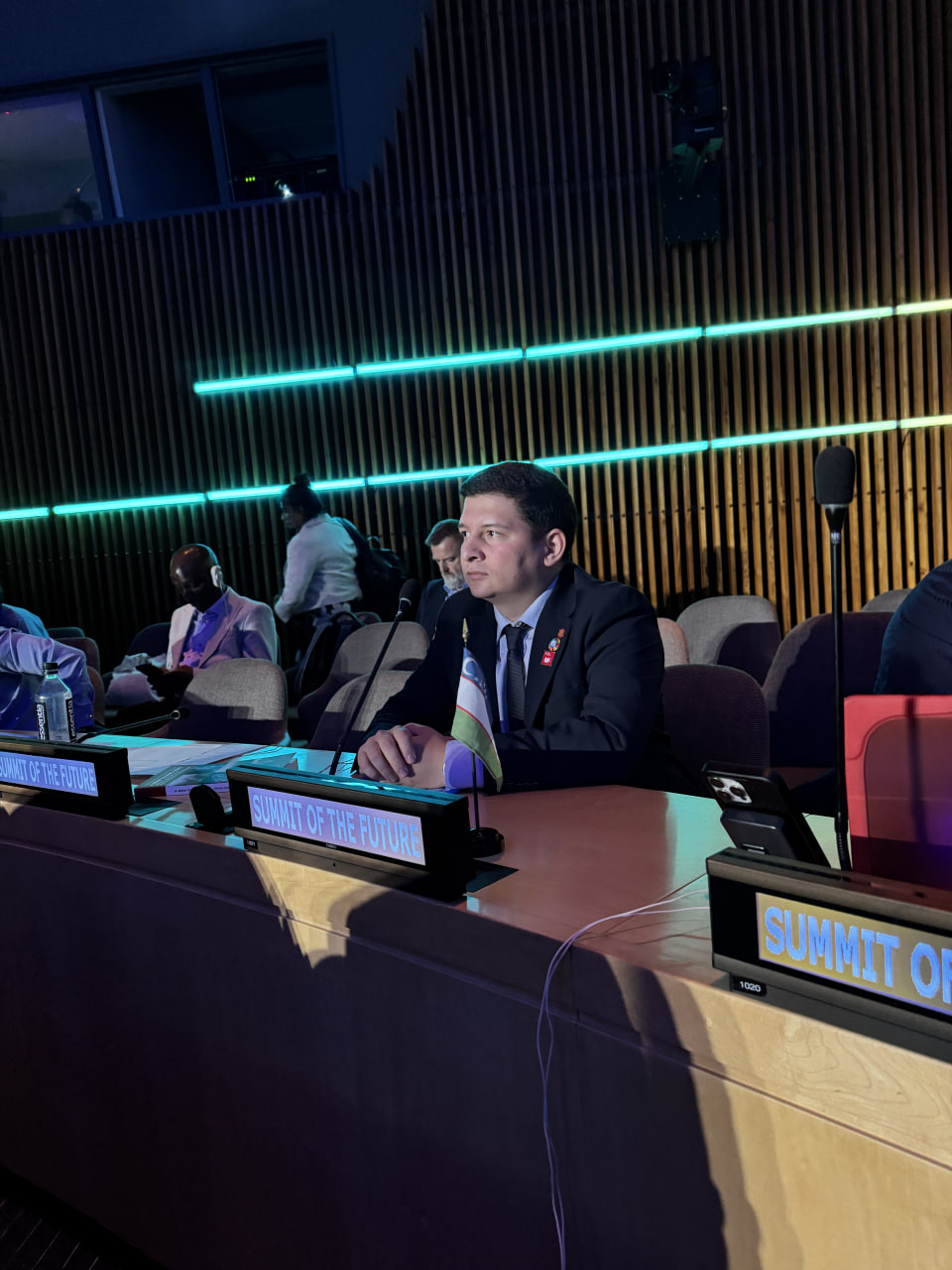
— Why do you attend international conferences? Is there real value in them?
— For me, conferences are strategic platforms to represent Uzbekistan and Central Asian youth globally. Some people attend for PR; I attend to gain real knowledge and perspectives that matter for my country and my work. First of all, you see firsthand what the world is actually discussing — staying aligned with global development.
Second, you test your own work by translating it into a global language: Can you answer tough questions? Are your arguments strong enough? How do competitors operate internationally? Third, networking is not just exchanging business cards. It’s about building long-term cross-border cooperation that later adds real value to projects and professional growth.
— You’ve attended UN-system events and high-level forums and even asked questions there. Why was that important to you?
— In 2018, at a UN event in Tashkent, I realized that some international participants didn’t even know where Uzbekistan was located. That moment had a strong impact on me.
I kept asking myself: why is a region with such a rich history and strategic importance still underrepresented globally?
Since then, I’ve made it a personal goal to raise Uzbekistan and Central Asia’s visibility on international platforms.
At multiple conferences, I openly asked: “Why is Central Asia often left out?”
It may be an uncomfortable question, but it’s a necessary one. If problems aren’t voiced, systems don’t change. I want our region to be seen not as statistics, but as an equal partner.
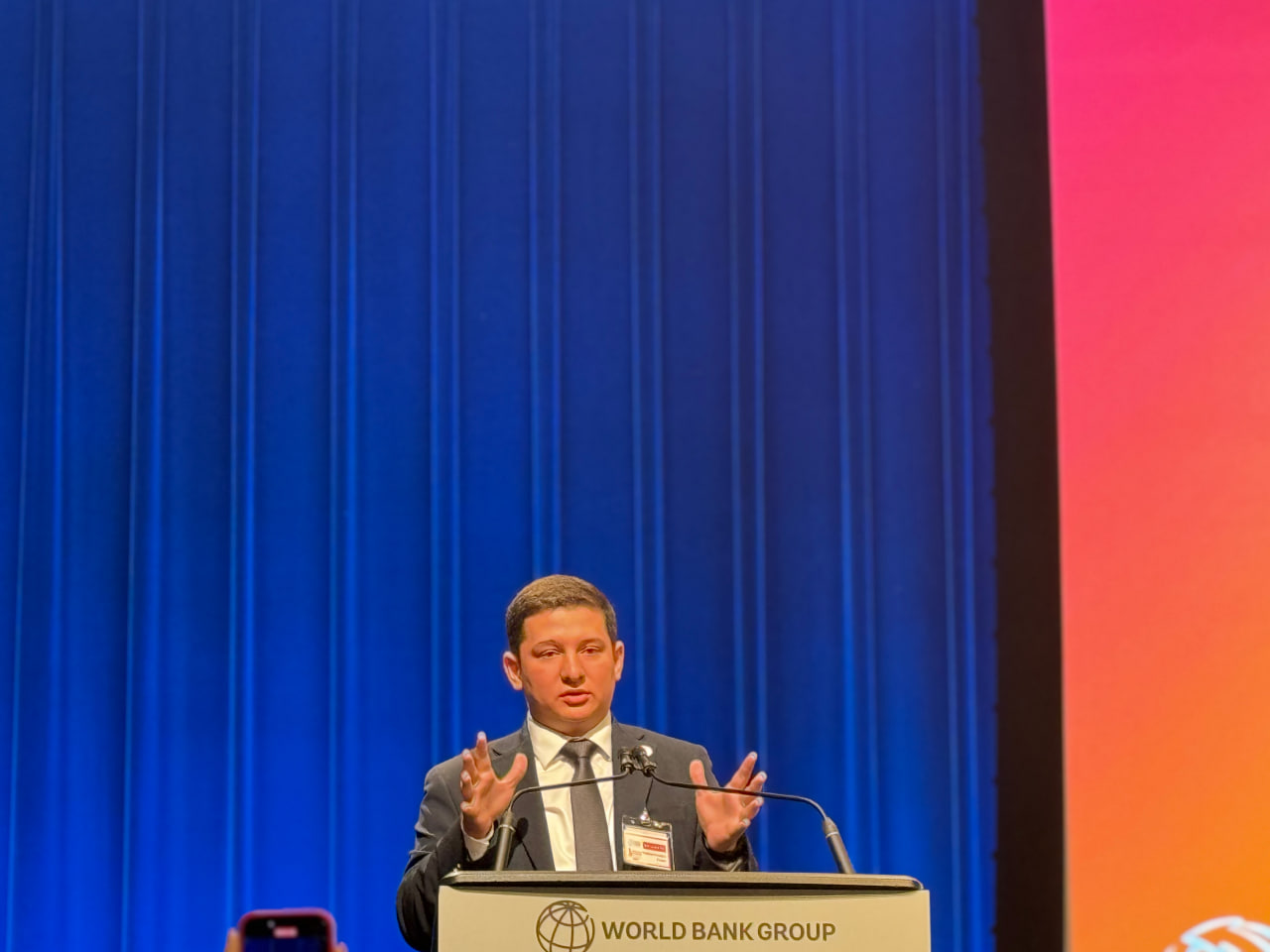
— You once mentioned attending a summit where you barely saw anyone from Uzbekistan. What did that signal to you?
— At the UN’s Summit of the Future – Action Days, I noticed that youth from many countries immediately found compatriots and joined them. I kept asking myself, “Where are our representatives?”
That’s when I realized: the issue isn’t attending a single conference — it’s the lack of systematic engagement of youth in global diplomacy. That’s why I try to represent Uzbekistan not as background noise, but as a clear presence — even through small details, like a lapel pin on my suit or a flag on the desk.
— Many young people return from conferences with great photos. Where do you think they go wrong?
— At some conferences, I don’t even have time to take photos. If asked, I show pictures from inside the sessions. The biggest mistake is thinking that attendance itself equals results. The global stage is not for tourists. Anyone who enters it must have three things: a clear goal, real value to offer, and a concrete post-conference action plan. Otherwise, it’s just wasted time and money.
— Conferences are expensive. How can young people manage the financial side?
— Yes, they often are. But the knowledge and opportunities gained frequently outweigh the cost. And the “money barrier” isn’t always absolute.
There are grants, fellowships, university and organizational sponsorships that cover travel, accommodation, or registration. There are also discounts for students and volunteers. The key is not to stop at “it’s expensive,” but to search for options, understand the system, and offer your own value.
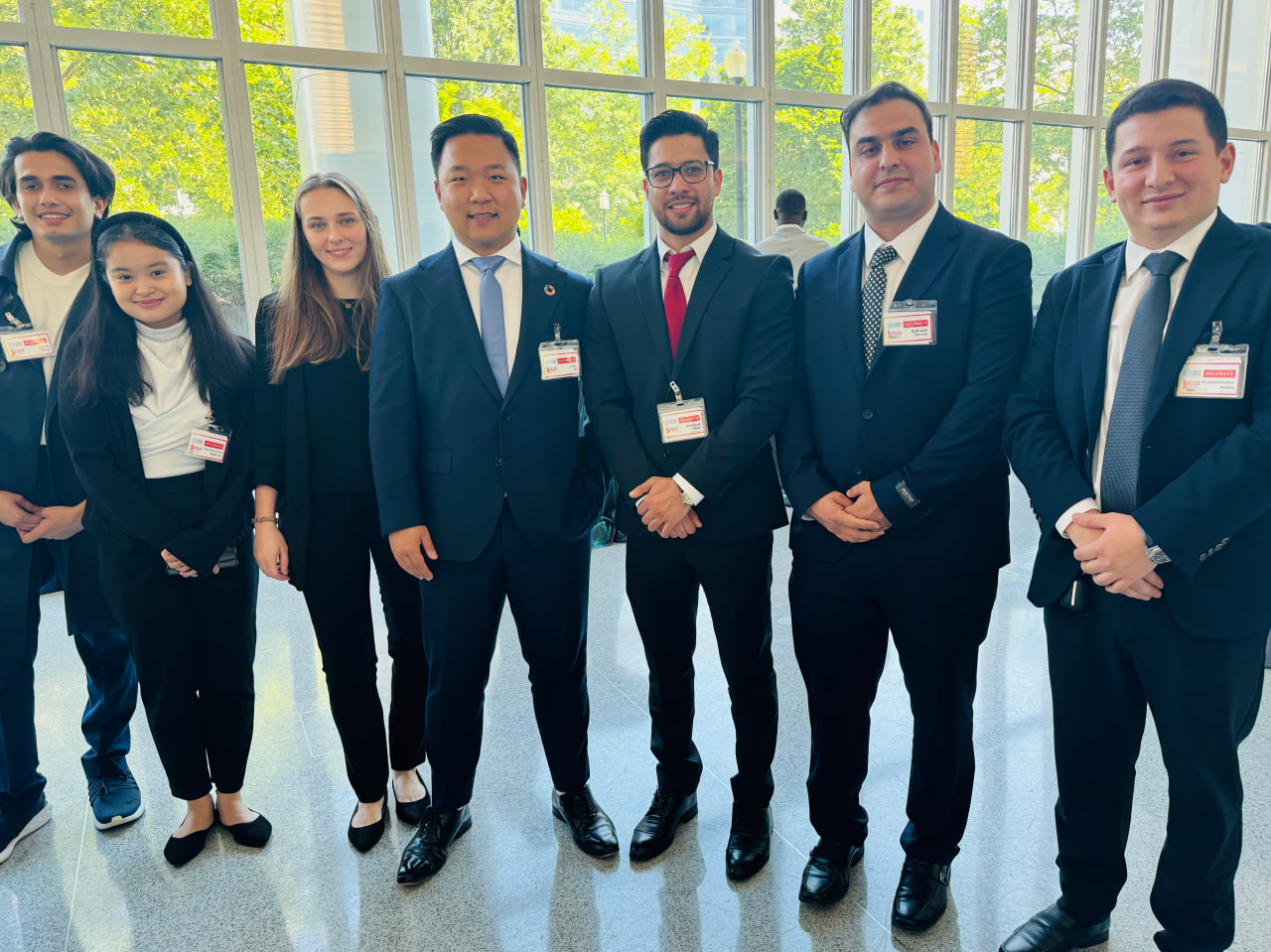
— You studied at George Washington University. Did U.S. education meet your expectations? How does it differ from Uzbekistan?
— The biggest difference isn’t prestige — it’s the approach.
In the U.S., the question isn’t “What did you memorize?” but “How can you apply what you’ve learned in real life?”
While education in Uzbekistan and the UK often leans toward theoretical learning, the U.S. emphasizes independent study, critical thinking, and practical application. Classes are built around discussions, case studies, and analysis. This approach significantly strengthened my analytical thinking, clarity of expression, and critical reasoning — skills that later proved decisive both at conferences and in professional work.
— You’ve said young people lack “bridges.” What are you doing to help build them?
— I always try to support young people from Uzbekistan when they reach out. Someone once guided me too. Today, some are applying to universities, others want to understand the U.S. system, prepare for interviews, or simply find direction.
In the U.S., this is called mentorship or coaching. I see it as contributing to society. Many people have potential — what they lack is a clear roadmap and structure.
— Let’s move to business. You worked as a business development consultant. What do you focus on?
— Primarily on business growth strategy, digital transformation, and process optimization. I’m currently involved in the transformation of two companies.
In practice, businesses often fail due to flawed strategies or resistance to change. Take Uber: it didn’t just create a new business model — it displaced entire industries that stayed in their comfort zones and ignored transformation. That’s why demand for business development is growing, although many companies still underestimate its importance.
— There’s also interest in your startup journey — especially the investor meeting and valuation. How did that happen?
— Finding an investor wasn’t easy. I first participated in competitions, then joined professional networks and built investor relationships. Throughout this process, I worked intensively on the startup and openly discussed it. One close acquaintance who followed the progress expressed confidence in the project and interest in investing. The startup’s concept and go-to-market strategy resonated with him. As a result, we entered discussions at a valuation of approximately $1.3 million and an early-stage investment agreement was reached. The key factor wasn’t numbers — it was trust and proof: demonstrating clear roadmap that the product will have demand and actually work in the market.
— Finally, in one sentence: what would you say to young people in Uzbekistan?
— The global stage is open — but you enter it not with desire alone, but with confidence, preparation, discipline, and real results.
 Author of the article: Iroda Farkhadova
.png "YouTube UZREPORT TV")


