



Aral Sea retreat devastates wildlife
Aral Sea retreat devastates wildlife
At the Aral Culture Summit in Nukus, participants discussed how to restore biodiversity in the Aral Sea region and ensure water supply for ecosystems.
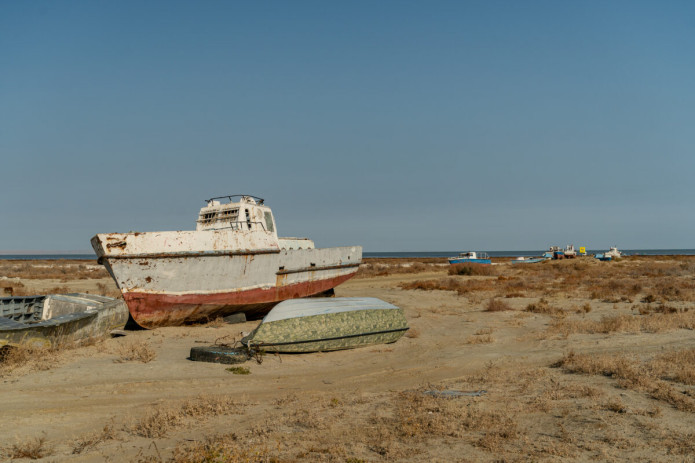
According to reports, local communities used to catch up to 35,000 tons of fish annually in the Aral Sea water basins. Millions of people worked in livestock farming, poultry farming, fishing, and agriculture in the fertile lands of the Amu Darya and Syr Darya deltas. However, regional authorities diverted major rivers to support agriculture and built numerous hydrotechnical structures, which caused the Aral Sea’s water volume to shrink by 14 times. Its salinity level increased nearly 25 times. This destroyed almost all the fish and other marine life that once thrived in the Aral Sea.
The Aral Sea region, once famous for its rich biodiversity, now faces a dramatic decline in plant and wild animal species. Currently, 12 species of mammals, 26 species of birds, and 11 species of plants face the threat of extinction.
The newly formed Aralkum Desert now covers more than 5.5 million hectares of the dried-up Aral Sea bed and continues to expand across the region. Each year, about 100 million tons of dust and toxic salts rise from this area into the atmosphere. Strong winds and sandstorms carry them to distant regions. Summit participants discussed these challenges and experts shared proposals to protect and preserve biodiversity.
.png "YouTube UZREPORT TV")