


Scientists read ancient sealed documents without opening them
Scientists in Switzerland have perfected a technique to read ancient, fragile documents without opening them.
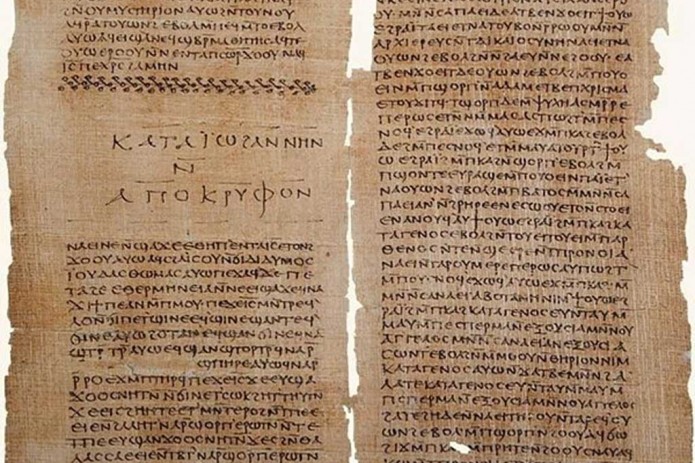
Scientists in Switzerland have perfected a technique to read ancient, fragile documents without opening them.
The work, at the Ecole Polytechnique Federale de Lausanne (EPFL), uses X-ray tomography to scan through an entire book, page by page, without even touching it.
The technology will be used to build an open digital archive of Venice, which has an enormous amount of records documenting around 1000 years of history covering 50 miles (80km) of shelving.
The team, led by Professor Giorgio Margaritondo at EPFL's Laboratory for Quantum Magnetism, started with a small document, which has remained unread since the 14th century.
"It is in the year 1351 a young lady from Venice, Catharuçia Savonario, wrote a testament and then the testament was sealed and remained sealed for all these many centuries. But now for the first time we have been able to read inside without opening it thanks to the X-ray techniques," Margaritondo said.
"It is the first step towards the real use of these techniques for the Archivio di Stato (State Archives of Venice) in Venice. We moved from a feasibility tests to real experiments, then we went to this big book which is also an important test because what you find inside the Archivio are not only small documents but most of the items are huge volumes the size of a table and so we must be able in future to look inside them," he said.
Many of the documents at the State Archives of Venice are too fragile to be opened.
"We need a non-invasive technique to read inside them. X-ray machine and X-ray tomography is the solution. Thanks to the use for thousands of years of iron-based inks we can read them using X-rays. Now the real challenge is to extract the pages from this tomographic cube and read the single pages and then we can put the light on our European history," said physicist Fauzia Albertin.
Before revealing the contents of the sealed testament, the physicists developed their scanning technique with a scientific book from 17th century that could readily be opened for comparison with the data obtained with X-ray tomography.
The book was scanned, layer by layer, at EPFL's PIXE laboratory for X-ray radioscopy and tomography platform.
The scientists could therefore navigate through the X-ray data to read the text and drawings of the various pages.
Their technique differs from existing techniques that use a different frequency of light for the detection of modern plant-based ink.
Also, in contrast to modern-day books, ancient documents present the challenge that the paper is very rarely flat, but rather warped or weathered by time.
For the moment, the physicists are manually extracting the pages from the X-ray tomography scans. The next steps include building an algorithm that automatically detects the different pages.
.png "YouTube UZREPORT TV")