



From the University to the Community: How a High School Student Is Making Research Accessible
Through Arts for Adversity and her music classes in Tashkent, Laziza Azimova is exploring how ideas from neuroscience, music, literature, and the arts can move beyond universities and into everyday life.
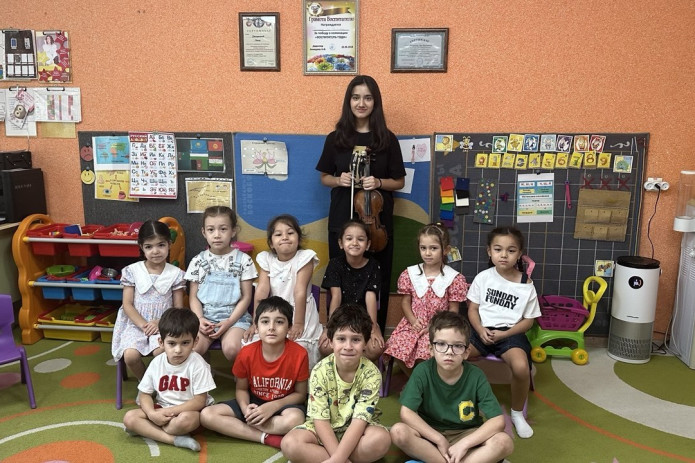
Laziza Azimova was born and raised in the United States to Uzbek parents. Her high school years took an unexpected turn when her family moved to Tashkent for work. She later had the chance to return to New York, with offers from Stuyvesant High School and the Special Music School. Instead, she chose to stay and finish high school at the Presidential School in Tashkent.
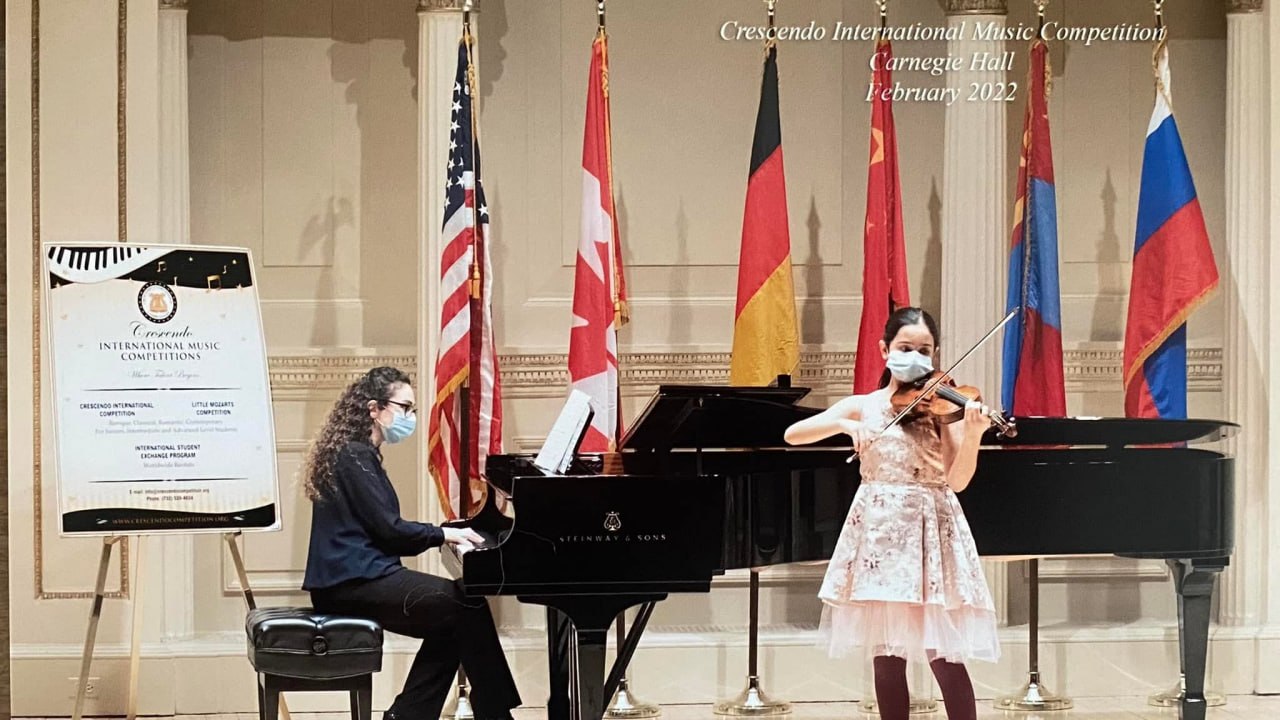
Music has been part of Laziza’s life since she was little. She studied violin in precollege programs at IU’s Jacobs School of Music, Carnegie Mellon University, and the Manhattan School of Music. She has won several international string competitions and made her Carnegie Hall debut at eleven, becoming the youngest Uzbek violinist to perform there.
Laziza is also a poet and enjoys drawing portraits. Last year, she published her first poetry collection, Tapestry of Thought. Her interest in art eventually led her to a new question: why do music and other forms of creativity affect us so deeply? That question led to Arts for Adversity, a project that makes the work of researchers, artists, and scholars more accessible outside universities.
1. You grew up in the United States but chose to finish high school in Uzbekistan. Looking back, what do you think you gained from living and learning between these two worlds?
Moving to Uzbekistan was difficult at first. I could speak Uzbek, but studying and expressing myself at school was completely different. Sometimes I knew exactly what I wanted to say but couldn’t say it the way I could in English. I had to learn to ask for help, work harder at things that had once come easily to me, and be patient with myself. Slowly, Tashkent stopped feeling temporary. My language improved, I made close friends, and I became part of a community. I also discovered a side of Central Asia I hadn’t really known growing up in America: its history, literature, and intellectual traditions. So when I had the chance to return to New York, I surprised myself by choosing to stay and finish high school here.
I think the experience changed the way I see where I belong. I don’t feel that I have to choose between being American and Uzbek. Both places have shaped me, and I can carry both with me. It also taught me not to be discouraged when I’m not immediately good at something. Something difficult or unfamiliar doesn’t mean I don't belong there. Sometimes I just need time to learn how to find my way.
2. You have said that your understanding of music changed during the pandemic. What happened?
During COVID, our Aunt Margaret was 93 and lived in a senior living facility in Palo Alto. We couldn’t visit her inside, so we would see her from outside her balcony. Sometimes I brought my violin and played whatever I had been practicing. After a while, her neighbors started coming out onto their balconies too. Suddenly, I wasn’t playing just for Aunt Margaret. People were listening from all around the building, waving and clapping. I still remember seeing them smile and laugh during such a lonely time.
Until then, violin had mostly been about practicing and lessons. That was the first time I realized that nobody there cared if every note was perfect. Music was doing something else. It was bringing people together when they couldn’t physically be together. I didn’t have the language for it then, but I think many of the questions I’m asking now started on those balconies.
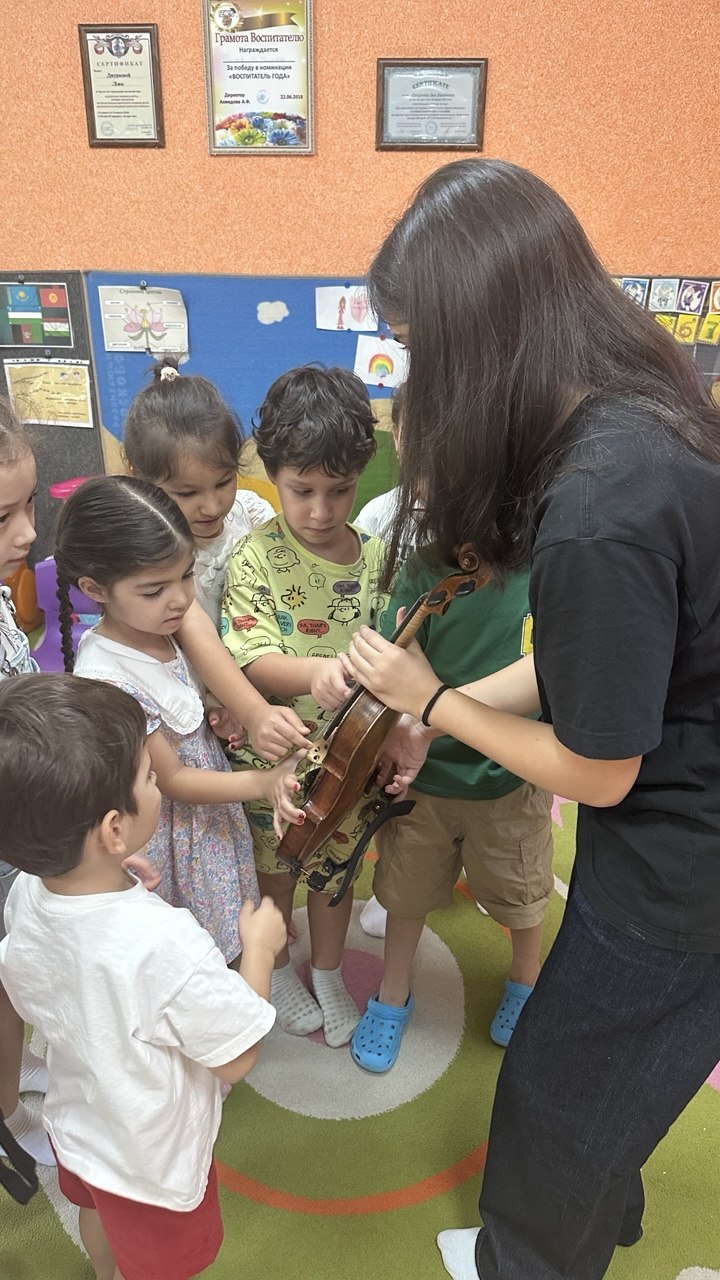
3. You have studied neuroscience through summer programs at Columbia, Johns Hopkins, and Stanford. In Tashkent, you also started teaching music classes for neurodivergent children with students from a local conservatory. What have the children taught you that a neuroscience class or research paper couldn’t?
Probably that people don’t behave like the averages in research papers. When we started the classes, I sometimes assumed that if an activity worked well with one child, it might work with another. But every child responds differently. One might immediately connect with rhythm, another might want to explore an instrument in their own way, while someone else might not be interested in what we planned at all.
Research needs categories and measurements because that’s how researchers look for patterns across larger groups. But when you’re actually teaching, every child is different. What works for one may not work for another. Teaching made me more interested in research, but also more careful about how I read it. Now when a study says something “works,” I want to know: for whom? What actually changed? And did all the children respond in the same way?
4. One of the ideas behind Arts for Adversity is that scholarship shouldn’t stay inside universities. Why is that important to you, and how do you make complicated research understandable to people outside academia?
I grew up around universities, so being in libraries and talking to professors always seemed normal to me. As I got older, I realized that not everyone has that kind of access. There are people in universities asking fascinating questions, but most people will never read their research. That became part of the idea behind Arts for Adversity. I wanted someone my age to be able to discover the work of a neuroscientist, musician, psychologist, historian, or artist without already knowing much about the subject. I also wanted research to be useful beyond universities. For example, we share research on music and neurodivergence in language that is easier for parents and families to understand.
At the same time, I don’t want to make complicated ideas sound simpler than they really are. I’ve learned from writing my own papers that research doesn’t always give us a clear answer. When I interview someone or write about a study, I start with the questions that genuinely interest or confuse me and try to give readers enough background to understand why the research matters. Sometimes I hope they learn something they can use; other times, I just hope they leave curious enough to learn more.
5. Through Arts for Adversity, you’ve had the chance to speak with researchers, musicians, and other people whose work you admire. What has surprised you most about talking to people whose work you had previously known only through books, articles, or performances?
What surprised me most is how open people are about what they still don’t know. When you read a published paper or book, you see the finished work, and everything can seem very certain. But when you talk to the person behind it, you realize that their research often started with a simple question. And one answer usually leads to many more questions.
I’ve also learned not to be afraid of asking questions just because I’m younger or don’t know nearly as much about the subject as the person I’m interviewing. I prepare and read their work carefully, but sometimes the best question is simply something that confused or surprised me. That’s what I try to bring to Arts for Adversity. I want someone my age to read these conversations and think, “I never thought about that before.”
6. When you first started Arts for Adversity, what questions were you asking? What are you curious about now that you weren't curious about then?
When I started, my question was basically, “How can art help people?” I thought the answer would be pretty straightforward. Now my questions are more complicated. When we say music helps someone, what does “help” actually mean? Does music always need to make us feel better? Sometimes people listen to sad music when they’re already sad. Why do we do that? And if music can help us understand difficult emotions, can poetry do something similar?
That’s one reason I’ve recently become interested in Rumi. Growing up in America, I mostly knew him as the poet whose quotes were everywhere online. Living in Central Asia made me curious about the history and tradition behind those words. Now I’m interested in how his poetry deals with separation, longing, and loss, and why people from so many different backgrounds still turn to it hundreds of years later. I don’t know where these questions will take me next, and I think that’s what makes them interesting.
Article author: Iroda Farhodova
.png "YouTube UZREPORT TV")