



Center for Islamic civilization – symbol of national identity, science, education, and culture
Center for Islamic civilization – symbol of national identity, science, education, and culture

President Shavkat Mirziyoyev visited the Center for Islamic Civilization in Uzbekistan to review ongoing construction and development efforts. This unique project has no historical equivalent in Uzbekistan. Builders have already completed the magnificent structure, and construction now nears completion. The project follows the presidential decree issued on June 23, 2017. On the day of the Ramadan Hayit holiday in 2018, the president laid the foundation stone.
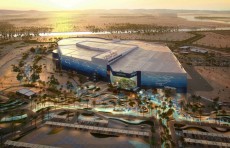
The center’s grand structure rises three stories high, reflecting the style of ancient architectural monuments. Its traditional dome, ornate façade, and intricate national ornamentation enhance its beauty and grandeur. Four portals, each standing 34 meters tall, frame the complex, while the central dome reaches 65 meters.
The Hall of the Quran will serve as the heart of the center, housing the world’s most valuable Islamic relic—the ancient Mushaf of Uthman. The exhibition will also feature Quranic copies from the Samanid, Karakhanid, Khwarezmshah, Uzbek Khan, and Timurid periods, along with their Old Uzbek translations. Additionally, the hall will showcase rare handwritten manuscripts of the Quran from around the world.
The complex will introduce thematic sections: "Pre-Islamic Civilizations," "The First Renaissance," "The Second Renaissance," "Uzbekistan in the 20th Century," and "New Uzbekistan – The New Renaissance." President Mirziyoyev closely examined their scientific concepts and the research opportunities they provide.
Artifacts, manuscripts, photographs, and multimedia technologies will present these historical periods. The exhibition highlights the contributions of scholars and thinkers such as Al-Khwarizmi, Al-Farghani, Al-Farabi, Al-Biruni, Ibn Sina, Mahmud Zamakhshari, Mirzo Ulugbek, Alisher Navoi, and Ali Qushchi. It also explores the legacy of prominent Islamic scholars like Imam Bukhari, Imam Tirmidhi, Hakim Tirmidhi, Abu Mansur Maturidi, Abu Mu’in Nasafi, Kaffol Shashi, Abdulkhaliq Gijduvani, Najmuddin Kubra, Burhaniddin Marghinani, Bahauddin Naqshband, and Khoja Ahror Vali, highlighting their contributions to Islamic enlightenment.
Another section will honor remarkable women of the past, including Bibi Khanum, Khonzoda Begim, Gawharshod Begim, Gulbadan, Nodira Begim, Uvaysi, and Anbar Atin, who actively supported science and the arts. The exhibition aims to inspire young women today.
President Mirziyoyev emphasized the center’s significance and purpose. "At the core of Islamic civilization lie science, culture, education, and moral values. These principles form the foundation of our center. Its main goal is to unite the millennia-old heritage of Islamic culture linked to our country in one place. Every visitor will witness the grandeur of this history and understand that Islam is fundamentally a religion of peace, progress, and tolerance. Moreover, they will gain a deeper appreciation of Uzbekistan’s extraordinary contributions to world civilization"-the head of state said.
The president urged scholars to study the legacy of great ancestors and transform it into a dynamic force that addresses contemporary challenges. He emphasized the need to coordinate research at the International Islamic Academy of Uzbekistan and centers dedicated to Imam Bukhari, Imam Tirmidhi, Imam Maturidi, and other institutions. Through joint efforts, scholars must develop scientific responses to modern challenges and counter ignorance with education.
The center actively collaborates with leading international academic organizations, including UNESCO and ICESCO. In August 2024, Tashkent and Samarkand hosted the 8th International Congress on "The Legacy of Great Ancestors – The Foundation of the Third Renaissance," which gathered 200 scholars from 35 countries. Participants proposed valuable ideas for the center’s future development.
After reviewing the construction progress and future exhibition plans, President gave specific instructions to organize the center’s operations, enrich its content, and implement further improvements.
During his visit, President also reviewed plans to expand Tashkent’s tourism sector. Developers are currently implementing large-scale tourism projects across Bektemir, Mirzo-Ulugbek, Mirabad, Yunusabad, Yakkasaray, and Yangihayot. These areas will soon feature dozens of 24/7 tourist attractions. Tashkent’s Old City, a site of great historical value, attracts international visitors year-round. As part of its transformation into a specialized tourism cluster, officials established a thematic tourist street in Gulbozor Mahalla near Chorsu Bazaar last year. Large-scale restoration efforts continue at Abdulla Qodiriy Park of Culture and Recreation. Planners are preparing to launch a new gastronomic and tourism street in Almazar District. They have selected 17 streets and 32 alleys for development, ensuring that new tourism infrastructure preserves the Old City’s unique architecture. These projects will boost local entrepreneurship, adding 250 new businesses and 1,500 jobs. The daily tourist flow is expected to rise from 4,000 to 11,000 visitors.
President instructed officials to expand opportunities for entrepreneurs and artisans while developing new tourist routes to make Tashkent’s travel experiences more immersive and engaging.
.png "YouTube UZREPORT TV")